Yesterday morning, before my first Greek class, I met the other HoD women at an undisclosed location to meet Eleni (named changed, just in case), who works for an organization that reaches out to trafficked women. We are hoping to partner with her, so that she will send us women who are ready and able to leave their situation. In turn, when women graduate from our program, we will send some of them back to Eleni to work with her. That’s cool enough, but hearing Eleni’s story blew my mind and strengthened my heart. Continue reading
Christian
Being Okay With Being in the Desert
I’ve been in a spiritual desert lately. Which isn’t so bad, really, except that I’ve also felt like being in a spiritual desert is something to be ashamed of. “Why aren’t you reading your Bible?” I imagine people asking with judgmental concern. “Why aren’t you praying more?”
It seems kind of petulant to just tell the truth: “Because I don’t want to.”
It seems kind of silly that all it took was eight pages of a book to convince me that I may as well speak up. Reading Nadia Bolz-Weber’s Accidental Saints: Finding God in all the Wrong People (also the author of the amazing Pastrix) is like simultaneously being calmed and inspired. I love her for her mess: she’s a Lutheran pastor, former alcoholic and stand-up comic, current struggler with loving people and caring about God. I want her to be my pastor so badly. Continue reading
Christmas Hymns
I was in a bad mood at church yesterday, and singing “O Come, All Ye Faithful” didn’t help. It should be ‘come all you doubtful, stumbling and hesitant’ not ‘come all you faithful, joyful and triumphant,’ I thought bitterly. I have so little patience with the reality that some people are confident and happy in moments when I am not.
But we followed the bright song with “O Come, O Come Emmanuel,” which is my all-time, constant favorite Christmas hymn. Its minor chords instantly put a smile on my face, and I remembered that Christmas is a pretty dark holiday. There is joy, definitely, in the fact that the God who created everything decided to become human to love us more intimately. But our celebration of Christmas is also about the longing of Israel 2,000 years ago for a savior, mirrored in our current longing for a returned savior – for the end of all this corruption and pain and half-answered prayers. Continue reading
Choosing Love Over Fear
I was going to write a blog post about the nauseous horror I feel every time I go on Facebook and see Christians praising Republican leaders for refusing to allow Syrian refugees into our country. I was going to talk about how of course some terrorists will take advantage of the situation, but how….I cannot fathom why that would keep us from helping people in need.
I say “I was going…” because I found a blog post that said everything I wanted to say. Consider taking the time to read Klinton Silvey’s blog post “Something Christian Millennials ‘Don’t Get.'” And if you won’t take the time, here are a few passages that especially resonated with what I wanted to say.
I was raised in a small-town Baptist church. I was taken there Sunday morning, Sunday night and Wednesday nights. I don’t care how much you like to goof off, if you spend that much time in a church, you’re going to pick up on major themes whether you want to or not.
One of those major themes is that we should be courageous. Another is that we should love our neighbors as ourselves. Another is that life is eternal.
These themes are all over the Bible. “Be strong and courageous,” God told Joshua. “Perhaps you are here for such a time as this,” Esther’s uncle said. “Do not fear those who can kill the body,” Jesus said.
Courage, love, and eternity. Those are the hallmarks of my Christian upbringing too. We are free to love courageously because our hope is not in this world – we are eternal beings, and death is just a doorway into the next phase of our existence. Continue reading
My Dallas Church Preached a Sermon on Singleness, and I Lost My Mind
It’s not very often that I hear a sermon and mentally scream, “IS THIS REAL LIFE?” but my good friend Mike Stroh preached on singleness at my Dallas church, and it IS real life. I remember very specifically one Father’s Day sermon years ago that exalted marriage and parenthood, and I sat there biting back tears thinking, “this is not for me, this is not for me, this is not for me.” I felt so incredibly alone in my church pew. THIS SERMON, however, made me want to dance around screaming, “this is for me! this is for me!”
Mike opens the sermon assuring listeners that this is not a token sermon to make singles feel better, it is instead a theology of singleness for everyone, from which everyone should learn. Thus begins Mike’s habit of using incredibly specific terms that my single friends and I have complained about the church not using. I’ve had many lunches where my single friends lamented the lack of a theology of singleness – we talk about the biblical basis of marriage ALL THE TIME and so it is valued. Why don’t we talk about the biblical basis for singleness? (For the record, Mike is married to the amazing Libby Stroh, which makes me love his sermon even more. Being married is, in our Christian culture, the privileged position, and it is mostly from the mouths of the privileged that change can occur.) Continue reading
Deep Thoughts at the Parthenon (in Nashville)
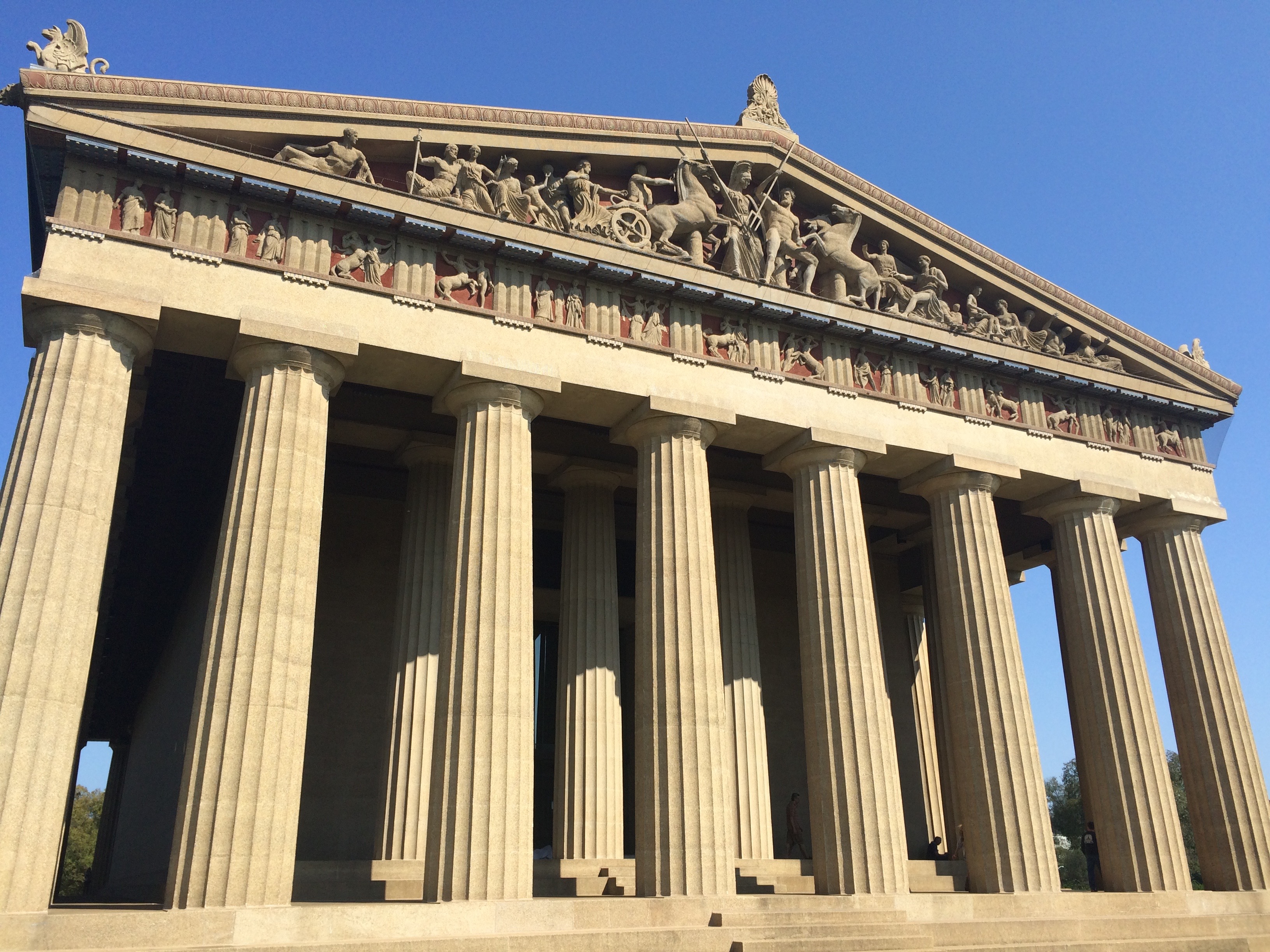
I left Stephanie this morning, which sucked, but I went immediately to the Parthenon in Nashville, which helped. It’s 80 degrees and breezy, so I walked around in the grass holding my shoes. I stuck in my earbuds and let the “Finding Neverland” soundtrack convince me that life is magical, and my life is beautiful. I enjoyed the feeling of perfect contentment that comes from a perfect moment.
Last night I had dinner with Kyle (a friend from my church youth group days) and his wife. We discussed being no-longer-Baptist, and some of the more mystical reasons why we don’t fit in the denomination that raised us. He said his pet theological theory is that while taking Communion, time and space collapse. In that moment, you’re taking the bread and the wine with all believers around the planet and throughout time. More than that, you are experiencing Jesus’s death on the cross each week while you take the elements – not that Jesus dies again and again (his love and power is such that it’s only necessary once) but the act of Communion is otherworldly. He dies as we drink and eat, and we are saved.
Standing at the Parthenon, I kept thinking about time and space collapsing. Granted, this facsimile is not the same as the one sitting on the Acropolis in Athens. But as I walked its corridors and touched its pillars, I felt like time was collapsing. I’ve circled Greece for so long. It was the first place I went when I left the United States. I returned two more times. I love its history and its mythology. I reconnected with Greek friends, who offered me a job, and soon I will make Greece my home for a year.
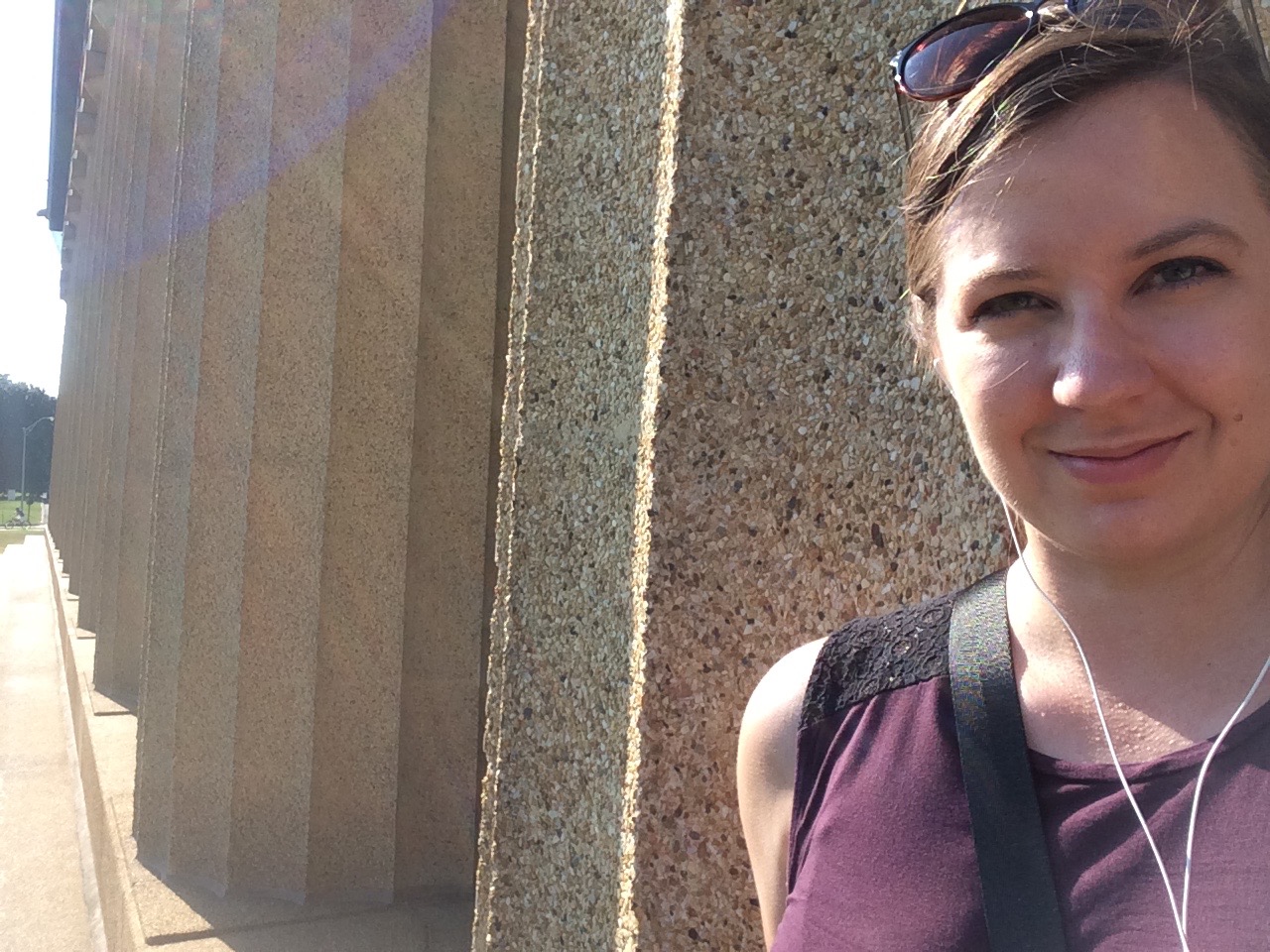
Standing in Nashville, Tennessee, staring at Greek friezes on a remade Parthenon halfway through my road trip to raise funds so that I can live in Greece and stand in front of the first Parthenon, time and space collapsed. God’s ways are mysterious and scary, but so good. I can’t wait to take this next step and see where it takes me.
Faith, Hope, and Love
And now these three remain: faith, hope and love. But the greatest of these is love.
1 Corinthians 13:13
During a conversation with Elizabeth, I said, “One of my favorite things I learned at DTS…” which, to be honest, I say about almost everything. If I’m thinking about it, it’s my favorite! Anyway, during this particular conversation, I said, “You know that verse about faith, hope, and love, but love is like, the best of them all?”
“The greatest of these is love?” Elizabeth asked.
“Yes, thank you. I promise I went to seminary.” Continue reading
If the Church Were Like a Counseling Office
I wish the Church could learn from the counseling world. Although the body of Christ ought to be the place where we can share our deepest struggles and our most embarrassing weaknesses, too often we show up on Sunday with a smile on our face and a report on God’s blessings, with maybe an obscure reference to “personal sin” thrown in for a few seconds.
I say this with all the love in the world for the universal Church. In a lot of ways, it’s doing so much right. I think the Church is excellent at meeting people’s physical and spiritual needs. Where it often fails, however, is addressing people’s emotional needs. It is easy for me to fall back into thinking America’s Christian culture’s rhythms and language are normal. That is, until I talked with a woman who has gone to counseling, and then I pulled her out of the church business meeting so we could keep talking, because it was intoxicating. Continue reading
My Cousin’s Sermon Reminded Me That Stories are Powerful

Yesterday I went to Downs, IL (a tiny little town outside of Bloomington) to hear my cousin preach. I was going out of low-expectation familial support, but WOW, it turns out my family is very talented. Steve is three months younger than me, but he is already a phenomenal preacher. He’s laid back, good at working the room, and really great at getting his point across. So great, in fact, that over 24 hours later, I can still remember what he said.
With Acts 6 and 7 as the backdrop, Steve talked about Stephen, the first Christian martyr. But the point wasn’t about death, or intensity of faith, or anything like that. Instead, the point was about story. Continue reading
God’s Will For Your Life
We’ve all been there. A decision looms ahead, one that could take our life in one of two (or three!) very different directions. The excitement of having options transforms into anxiety that we will choose incorrectly. And if you are a person who believes in a good and powerful God, at some point you will probably pray, “What should I do!?”
Usually those questions are met with supernatural silence.
Does God not care about our future and his silence is therefore a giant celestial shrug? Or perhaps the problem is me: I’m not listening hard enough or trusting deeply enough.
John Ortberg suggests an alternative view, one that reframes our concerns about God’s will for our lives from actions and events to persons and character. Continue reading
 It Is Trish