What I Read | August 2016

From a Russian classic to a dragon-centric fantasy to inspirational non-fiction…my reading tastes were diverse this month!


theidiotThe Idiot by Fyodor Dostoevsky

I started this in July at the request of one of my new friends.  It’s her favorite novel of all time, and while I can’t claim that for myself, I was really impressed with it.  I’ve always felt scared of the dense Russian novels, but I found The Idiot to be a quick read for 700+ pages of stories and psychological analyses.  It did take me a while to acclimate myself to upper class Russian society in the 1800s, but there was enough common humanity to keep to me going.  It’s also pretty depressing, so fair warning.

Harry_Potter_and_the_Cursed_Child_Special_Rehearsal_Edition_Book_CoverHarry Potter and the Cursed Child by J. K. Rowling

I loved this!  It in no way compares to the novels, but I never wanted it to.  The screenplay is a quick way to jump back into the world of Harry Potter, and I so enjoyed watching Harry struggle once more (he can save the world, but he doesn’t know how to parent a child – seems accurate).  I also loved Draco getting more development and the adorable relationship between Albus and Scorpius.  Perhaps it really is HP fanfiction, but I love HP fanfiction, so that is not an insult in the slightest to my mind.

220px-HmsdragonHis Majesty’s Dragon by Naomi Novik

After reading this alt-history novel about dragons during the Napoleonic War, I am 100% that dragons are cats with wings.  Obviously, this means I am SUPER into a story about the intense bond between human and dragon, though I felt this first novel was more interesting for the potential it showed for future stories than its own entertainment value.
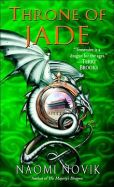
ThroneofjadeThrone of Jade by Naomi Novik

Speaking of future stories…this is the second Temeraire novel, and as I suspected, it was even better than the first!  This book follows Laurence and Temeraire on a long sea voyage to China, and it’s basically just one long “you two shouldn’t be together” “YES WE SHOULD” argument, which is exactly the sort of quasi-romantic co-dependent relationship I’m easily invested in.  Can’t wait to read more!
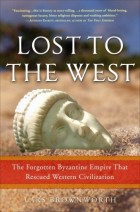
6415185Lost to the West: The Forgotten Byzantine Empire by Lars Brownsworth

Wow.  This non-fiction book about the history of the Byzantine Empire was SO engrossing, mostly because it is person centered rather than date centered.  I totally fell in love with General Belisarius and want to read even more about his life.  I also fell in love with the Byzantine Empire itself, to the point that I actually started crying when it finally fell and the Roman empire came to an official end (1,000 after its western counterpart).
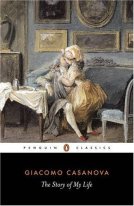
710391The Story of My Life by Casanova

I was so excited about Casanova’s memoir.  It was super entertaining, and I really enjoyed reading about a sex-positive guy who seemed to be shameless in a really healthy way…until I got to a part where he participated in a gang rape and assured his readers that the woman really liked it.  At that point I felt physically ill for days, because I genuinely felt so betrayed.  I couldn’t read any more, and I don’t really care to find out what he did after that, because I doubt it was “felt remorse.”

34352-1Salt of the Sea by Ruta Sepetys

I didn’t enjoy this quite as much as Sepetys’s other YA novels, but it was still a quick and interesting read.  She follows four people (with their own perspective and voice) to the harrowing voyage of the ship Wilhelm Gustloff…a true event that deserves for more attention than it usually gets.  I was mostly impressed, however, by how she showed that for many people in Germany/Prussia/Poland/etc, neither the Axis or Allied powers were good guys.  Death, rape, and property possession was inevitable, no matter which side won.

prototypPrototype by Jonathan Martin

I’ve already written a couple blog posts based on how inspired I was by this non-fiction Christian book.  It’s a fantastic reminder that transformation only comes when we are totally confident in God’s deep love for us.  I especially loved the way he described living in God’s love – that it’s found in those moments when we feel most free and creative, not when we’re hunkered in a room reading our Bibles (well, maybe it is for you, but not me).  It’s a very encouraging and uplifting book that I highly recommend to anyone who wants to deepen their understanding of God.


Did you read anything this month that was especially amazing (or especially awful)?  Leave a comment below and let me know!

The Doubting Christian’s Starter Pack

Are you drawn to the story of a God who lives and dies full of love for a rebellious creation…yet find yourself wondering how it could possibly be true?  Have you grown weary of rules that seem to cause slavery rather than freedom?  Are you skeptical about the usefulness of “good news” that doesn’t seem so good?  Do you worry that the religion you grew up with doesn’t apply to a more diverse population?

Welcome to the Doubting Christians Club!

In a desire to provide a strong foundation for its members, the Church has often promoted a rigorous belief system that seems to leave little room for doubt…which can make doubters feel like they either need to leave the Church or else hide their doubts.  I don’t believe either of these options is a good idea for the Doubting Christian – the first because you will miss out on the beauty you are drawn to, and the second because you will live a double life that will slowly isolate and destroy you.

Luckily, there are others out there just like you (myself, for instance)!  Listed below is the Doubting Christians Starter Pack that will stretch your mind, give you hope, and assure you that you are not alone.

71891781|  O Me of Little Faith: True Confessions of a Spiritual Weakling by Jason Boyett  

This is the book that began my journey toward becoming comfortable with my doubt.    It was given to me, unasked for, by my pastor, which has earned him my undying respect.  In this book, Boyett gets honest about his doubts and comes to the conclusion that perhaps doubters are closer to God than those who never question their faith – after all, doubt is an inextricable part of a faith given to something unseen.

Continue reading

The Making of an Ordinary Saint by Nathan Foster

61a-Xthj+SL._SY344_BO1,204,203,200_I already wrote a more personal blog post about how this book made a huge impact on me, but I’ll try to be a bit more objective in this official book review.

IT WAS SO AMAZING AND HEALING!

Okay, no, I can be more objective than that.

Nathan Foster is the prodigal son of Richard Foster.  While his father was gaining Christian fame for his book Celebration of Discipline, Nathan was suffering from depression and suicidal ideation, alcoholism, and drug abuse.  After getting sober, going to counseling, and deciding to love Jesus, adult Nathan eventually got curious about his father’s life work in bringing spiritual disciplines to life.  But while the elder Foster’s books are more proscriptive (how to practice the disciplines), the younger Foster’s book is a narrative. Continue reading

Self-Hatred, Legalism, and Grace, Grace, Grace


I distinctly remember sitting on Lindsay T.’s couch on July 4, 2013, drinking from a cheap Strawberry Daquiri Seagram’s bottle.  “I don’t know if God loves me,” Lindsay admitted.  We had recently upgraded our acquaintanceship to friendship, and this conversation was a milestone.  “God loves me when I’m good,” I responded.  “But deep down I’m pretty sure He’s just waiting to give up on me if I screw up.”

Just two years later when I graduated from seminary, everything had changed.

I spent three years hearing my professors say things like, “God is not the god of karma, but the God of grace,” and “It is grace that justifies us, sanctifies us, AND glorifies us,” and “When I get to heaven and God asks why I deserve to be there, I’ll just shake my head and whisper, ‘Jesus.'”  I spent three years in a church that offered weekly Communion so that we never forgot where our strength comes from.  I spent three years in a small group where we argued about abortion and gay marriage and Islam and transsexuality and feminism in safety and love.  I spent three years befriending counselors who were delighted to discover my darkest secrets and shared their own with me.  I was spoiled with grace.

But then I moved home.  The problem with leaving your hometown and changing is that when you return…you revert to your old mental and emotional habits.  Or at least, I do.  Who was I before I learned to trust in God’s unconditional love?  I was the Good Girl.  I measured my worth in my modesty, I argued people into heaven, and I covered my possessions in simplistic Christian statements.  I was determined to earn people’s approval.  I was determined to earn God’s approval.  I knew how to work the system, and honestly, it was comforting.  Legalism is nothing if not controlling, and I am good at controlling things.   Continue reading

What Is My Faith Made Of?

“Καλημερα!  Καλημερα, Τρισια!” I heard behind me as I turned right in front of the 1896 Olympic Stadium.  I turned around.  Nir held his arms open.  “Like my jacket?” he asked.  “My parents bought it for me.”

We discussed our weekends, and he asked about how church works.  He asked about Christmas and Easter, and I asked about Yom Kippur and Purim.  He said he wasn’t religious, but was I?  “Yes,” I said, grimacing.  I’ve thought about this before, how much I hate to tell new people that Christianity is a big deal to me.  Romans 1:16 runs through my head like an accusation, but I’ve decided that I’m not ashamed of the gospel…I’m ashamed of a lot of the people who go around talking about it.

“What does it mean for you?  To be religious or not religious?” Nir asked.   Continue reading

Girl at the End of the World by Elizabeth Esther

514iqc7VMnL._SY344_BO1,204,203,200_I am often drawn to books about people who grew up in conservative Christian circles who wind up abandoning their faith because of the pain in their past (like Jesus Land).  I want to understand how the faith that so empowers me has hurt other people so badly.  And I want to know how God’s people too often lead others away from God instead of toward him.  Many such spiritual memoirs end with the author swearing off religion, but in Girl at the End of the World, despite a childhood of emotional, spiritual, and physical abuse, Elizabeth finds her way back to faith, not through the fundamentalist religion of her past, but through the mystery-embracing truths of Catholicism.

Then I realize: She isn’t just Jesus’s mother.  She is the mother of our Lord and Savior.  Mary is important.

I touch my tender belly and think of the twins growing inside me.  I’m not just a mother either.  I am important.

The thought breaks over me like the rising dawn of a new day: What if God is pursuing me through the gentle love of His Son’s mother? What if, knowing that all the masculine roads to God are blocked for me, Jesus has sent His mother to lead me back to Him?

The granddaugher of the founders of The Assembly, Elizabeth grew up in a religious cult.  She writes about the pain of her childhood and the intense anxiety it provoked with raw honesty that absolutely draws the reader in.  She isn’t hesitant to expose herself, her family, or her faith, and because of that, her story is a beautiful portrayal of brokenness and hope.   Continue reading

Faith, Hope, and Love

And now these three remain: faith, hope and love. But the greatest of these is love.

1 Corinthians 13:13

During a conversation with Elizabeth, I said, “One of my favorite things I learned at DTS…” which, to be honest, I say about almost everything.  If I’m thinking about it, it’s my favorite!  Anyway, during this particular conversation, I said, “You know that verse about faith, hope, and love, but love is like, the best of them all?”

“The greatest of these is love?” Elizabeth asked.

“Yes, thank you.  I promise I went to seminary.”   Continue reading

Fill These Hearts by Christopher West

Ten pages in, I knew Fill These Hearts would be at the top of my favorite books lists.  Few other Christian books feel so human; West is deeply in touch with the longings of humanity as well as our hope.  Every sentence went straight to my heart, and I found myself excited to live, excited to be human, excited to admit my desires in hope of my destiny.

The main premise is that we all have universal longings–for meaning, for companionship, for eternal ecstasy and bliss.  We know we want those things, and we know that this life so rarely fulfills us.  In the face of thwarted desire, West suggests that we react in one of three ways:  1) the starvation diet, wherein we pretend we don’t care about those desires, 2) the fast food diet, wherein we try to fulfill our desires through unhealthy means, and 3) the banquet, wherein we lean into our desires and let them point us to God and his goodness.

I used to fall into the starvation diet category, miserable but in control.  I was leery of people who indulged in their desires and arrogantly called them “sinners.”  The past few years, thanks to mentors, books, and counseling sessions, I am learning to embrace the banquet mindset.  I’m so glad West wrote this book (which embraces both theology and pop culture–my favorite!) to give language to my emotions.  More than most books I’ve read, I hope everyone reads this one!  Continue reading

Made for More by Hannah Anderson

Divided into three sections, I was initially unimpressed by Anderson’s book.  The first four chapters cover the biblical story of the gospel, and while it’s kind of awful to say it was boring, it also wasn’t anything new.  However, it was a necessary set up that led into part two…which was amazing.

Anderson’s main point is that understanding our identity as image bearers of God changes everything about how we relate to ourselves, to others, and to God.  She discusses what it means to love like God, be generous like God, think like God, reign like God, and live complexly yet holistically like God.  She is a very wise woman, obviously changed by her study, and her book is full of eye-openers like:

Because of this, imago dei knowledge is by necessity more than a dry, crusty intellectualism; it is more than a “worldview.”  As its root, imago dei knowledge is the capacity to wonder–to look for God’s fingerprints everywhere and then to stand in awe when you finally see Him.  Imago dei knowledge means searching for Him with childlike curiosity, wide-eyed and eager to discover who He is and the world He has made.

And while she never explicitly claims to be a feminist, I high-fived the air when I read,

Too often as women, we have restricted ourselves to the “pink” parts of the Bible.  When we identify first and foremost as women, we can begin to believe that knowledge of ourselves will come primarily through passages that speak to women’s issues or include heroines like Ruth or Esther.  But when we do this, when we craft our learning and discipleship programs around being “women,” we make womanhood the central focus of our pursuit of knowledge instead of Christ.

Made for More was a book-sized encouragement.  By reminding readers who we are, created to image God in creation, she elevates our calling and makes the world feel expansive, welcoming, and exciting.   Continue reading

A Theology of Homosexuality*: Sitting on the Fence

[I wrote this article two years ago on a different blog.  In light of SCOTUS’s decision to legalize same-sex marriage throughout the United States, I thought it was worth sharing again.]

In today’s cultural climate, it’s nearly impossible to create a theology of sex without mentioning homosexuality (or bisexuality or transexuality).  The church has a long history of staying silent on topics it does not understand or topics which it finds unseemly, and that silence is detrimental to our witness.  However, I desperately don’t want to talk about this.  I am deeply non-confrontational, and this topic is one that will almost certainly make someone angry with me.

A Safe Conversation

With my insecurities in mind, I’ve decided to lay myself bare.  I’m going to share my heart and my mind.  I’ll explain my motivations and my doubts.  I’ll ask you to accept my ignorance and my indecisions.  I hope that by being so honest, you will understand me even if you do not agree with me.  My hope is that honest and compassionate conversations can occur in which people on all sides of the gay/Christian dialogue can speak and be heard.  This is my contribution.  Continue reading