Today is the second-to-last day for the Harry Potter 30 Day Challenge!
Day 21: Pick one character to bring back from the dead.
Just one!? If Lupin had survived the Battle of Hogwarts, I would choose Sirius. I want them to be BFFs for the rest of their lives. But I can’t bring back one without the other, because they’ve already spent so much of their lifetimes alone, and I hate that for them.
I would bring back Dumbledore, but let’s be real. He’s old, he lived a good long life, and he walked into death with his eyes wide open.
I’m a monster, and I never really cared all that much about Dobby. I could maybe get on board with bringing back Hedwig, but in the end there’s only one choice: Fred Weasley.
GEORGE NEEDS HIM. I NEED HIM. He died too young and too funny. Continue reading →
Day 16:Expecto patronum! What form does you patronus take and why?
I took the Patronus quiz on Zimbio and they said my patronus is a wolf!
I’m not sure I would have chosen that on my own–the quiz assumes I’m far more of an assertive leader than I really am. However, those ARE qualities I am trying to develop in myself (much like I think I earn my spot in Gryffindor by wanting to be brave more than I actually am). So I’ll take the wolf!
The more I think about this, the better it is. Imagine a swarm of dementors attacking, shouting “Expecto Patronum!” and a silvery wolf appears, leaping at them and snarling to keep them away. I can’t imagine a better patronus.
If I hadn’t taken the quiz, I might have said a cat. Not so much to fight dementors, but just like, for a peaceful companion. But I already have a cat companion, so I guess a wolf patronus would balance things out. One for fighting, one for resting. Continue reading →
Day 3 of my abbreviated Harry Potter 30 Day Challenge found on Short Story Long‘s blog.
Day 11: Which character would you say you are most like?
I kind of covered this yesterday when I talked about how much I love Hermione Granger. To keep things interesting, I’ll go with a different character, though Hermione remains my one and only.
I’m a lot like Remus Lupin, with his love of chocolate and books. He doesn’t own much, and he can move in and out of a place pretty quickly. He loves his friends but often feels like an outsider (though I am not, actually, a werewolf). He’s a good teacher, and he cares about getting his students invested through fun. Especially in The Shoebox Project, which apparently I will mention every day, I feel so much kinship with Remus, who only buys his friends books for holidays and sheepishly pretends he doesn’t care that they are immediately thrown to the side in favor of a more exciting gift. Continue reading →
This is Day 2 of my fulfilling Short Story Long‘s 30 Day Harry Potter Challenge. Check out previous questions at the end of the post!
Day 6: Which house would you want to be in?
This is the most important question in the universe. For a long time, I thought I would be sorted into Ravenclaw. Being smart is my thing. But when I signed up for Pottermore, J.K. Rowling’s official Harry Potter website told me I belonged in Gryffindor–and thus began a mild existential crisis. I never really wanted to be in Gryffindor, because that’s where everyone wants to be, but…what if I was wrong? After all, I can’t argue with Queen Rowling herself!
The kicker came when my friend Lindsay gave me a Gryffindor Quidditch t-shirt for my 27th birthday (getting older but never growing up). I asked how she chose the house. She said she was debating between Ravenclaw and Gryffindor, but while I value my intelligence, she thinks I have a stronger desire to be brave. And she was totally right. So. That’s the extremely long answer as to why I, a Ravenclaw, would definitely be sorted into Gryffindor (like Hermione and Remus Lupin). Continue reading →
Short Story Long did a 30 Day Harry Potter Challenge in August, and I couldn’t resist indulging my inner fangirl and doing it myself.
Day 1:Your favorite book?
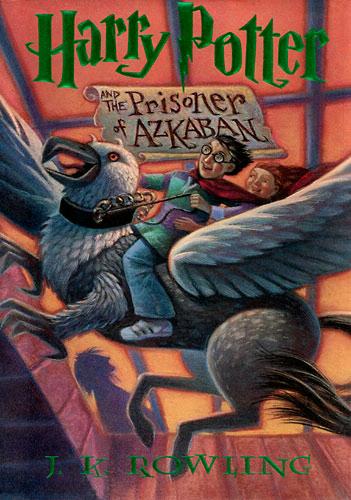
If I had to read a book out of context, I would choose Harry Potter and the Prisoner of Azkaban every time. It’s a great mystery novel on its own, but it also gives us fascinating details about Harry’s parents. The Marauders have a special place in my heart, and our first glimpses of Moony, Wormtail, Padfoot, and Prongs absolutely enthralled me. In Azkaban we have the introduction to Hogsmeade, the Shrieking Shack, dementors, Lupin, and Sirius! So many iconic people and places in the midst of a really awesome mystery that is not only interesting, but is personally relevant to our main character (and therefore, to us).
Runners up are Harry Potter and the Half-Blood Prince (Voldemort’s backstory! Dumbledore and Harry’s relationship as they *sob* journey to find the locket) and Harry Potter and the Deathly Hallows (it’s the end of everything – all the emotions!) Continue reading →
I once worked for two years as the children’s librarian at a public library. Every aspect of the job was fun for my nerdy, child-like personality, but the undisputed highlight was when I threw a Harry Potter party for the release of Harry Potter and the Deathly Hallows: Part II. It was a movie release, sure, but I hadn’t been a librarian when the books came out, and no way was I going to miss this opportunity. Continue reading →
In 2014 as a naive 26 year old, I took on the task of reading The Lord of the Rings for the first time in my life; and my world was rocked. I knew immediately that I had to marathon the movies and that I had to research and that I had to learn Elvish and that I had to figure out the personality types of each character. I imagine that people read The Lord of the Rings, and they spend years of their life thinking about which character they would be if transported into the story. They enter the world in their mind and frolick to and fro throughout Middle Earth as a part of the Fellowship, striking down Balrogs or dropping rings in flaming pits. Surprisingly I’ve actually spent zero time thinking about it. I know exactly who I would be.
Sam Gamgee, my friends. I am Sam Gamgee.
I’m not a crier. I understand some people are and that they can’t make it through Hallmark commercials without balling their eyes out. I tend to keep my tears tucked away for a rainy day. And I was rather proud of myself for making it through my first LOTR marathon without crying. That is until the very last part. (If you haven’t seen the movies, you may just want to stop now because I will be ruining it for you.) The very last scene of The Return of the King is where Frodo, Sam, Merry, and Pippin escort Bilbo to the shores because he has been offered invitation to the Grey Havens to be with the elves. They say their goodbyes as our four hobbits all stand by in sorrow and sadness. Gandalf says, “Here at the last on the shores of the sea comes the end of our friendship. I will not say, ‘Do not weep’ for not all tears are an evil.” (Oh my gosh. Stop. So beautiful.) As he turns to leave, he looks back once more to say, “It is time, Frodo.”
I recently reread The Giver and watched the movie for the first time. It’s fairly obvious that the book is infinitely better than its film adaptation, but it was, I think, worth watching.
But first, what I didn’t like.
The movie moves too quickly, speeding through explanations and experiences where the book lingers. The Community is hastily shown to us, whereas the book spends long chapters introducing us to their society, only slowly revealing how ominous their rules truly are.
The movie lacks a cohesive logic. In the book, Jonas and the Giver are the only two people capable of deep emotion. The actions and apathy of the other characters are seen as tragic and maddening, but we understand that without memories and emotions, they cannot help themselves. They are little more than robots.
In the film, however, characters act on emotion when they have no ability to do so. Lily looks sad at Gabe’s release, although in the book she happily agrees with her father that they did all they could for the child. Asher hints at jealousy when Jonas and Fiona start pairing off, and later he saves Jonas’s life out of what can only be loyalty–an emotion he ought not to have. And Fiona. Ugh, Fiona.
I loved her in the book. She (and Jonas’s father) are our most intimate windows into the tragedy of the Community. Although Jonas’s feelings for her mature and grow passionate, hers remain simple and naive. When Jonas rails against his father after learning the true meaning of “release,” he takes comfort in the fact that Fiona would never do such a thing. That is, until the Giver tells him that she is already being trained to release people. She stands in stark contrast to what we expect, allowing us to see the necessity of the memories Jonas is inheriting. She’s a good person; we like her. Yet because she does not have the empathy born of emotion, she will unwittingly do horrible things.
But in the movie, she fights alongside Jonas. After mere hours of being without her injections against the “stirrings,” she accepts a kiss and soon helps him escape. I understand that they are implying the power of love, but really? It cheapens Jonas’s journey and the importance of a shared history. If all it takes to buck the system is hormones coursing through their veins, a much simpler plan would be to get everyone to stop taking their injections for a day rather than attempting a dangerous escape. Plus, it turns the whole story into a romance, and come on. Don’t we have enough of those? I liked the plot much better when it was a boy’s love for an infant that spurred him into action rather than a pretty girl. Romantic love is an inspiration, but it is not the only emotion that encourages bravery and self-sacrifice.
And the Chief Elder! In her (admittedly brilliant) argument with the Giver at the end of the film, it seems like she has had just as much access to the memories as the Giver himself. If so, what is the point of his station? And again, this cheapens the tragedy of the book, where we see the elders deliberately avoiding any knowledge of the memories, wanting only the Giver’s advice out of context.
Whew. Okay. Apparently there were more things I disliked than I realized. HOWEVER, I stand by my earlier statement that the movie is worth watching, and for one simple reason. The memories. The first time Jonas sees full color, transported to the view of a dramatic sunset on the ocean, waves turned red in the waning light, my eyes filled with tears. The beauty was overwhelming after so much grey scale. I was moved to emotion again when the Giver transferred memories of courage to Jonas, of people parachuting, riding rapids, protesting, standing firm in front of tanks. And again at the end, when all the memories return to the people of the Community, and they see tornados, babies, concerts, lights, tears, running, praying, sunlight, death, pregnancy, and rain.
The movie is at its best when it takes on the role of Giver, filling our minds with memories and emotions, reminding us of the beauty, pain, and intensity that comes with being human.
The Giver: Do you know what that’s like? To love someone? I do. I’ve cried, felt sorrow. Love, song, dance. Felt real joy.
Chief Elder: Then you should know better than anyone. You have seen children starve. You’ve seen people stand on each other’s necks, just for the view. You know what it feels like when men blow each other up over a simple line in the sand.
The Giver: Yes, I do, I do.
Chief Elder: And yet–and yet! You and Jonas want to open that door again, bring all that back.
The Giver: If you could only see the possibility of love. With love comes faith, comes hope!
Chief Elder: Love is just passion that can turn. It turns into contempt and murder.
The Giver: We could choose better.
Chief Elder: People are weak. People are selfish. When people have the freedom to choose, they choose wrong. Every single time.
The Giver: Loss, pain, music, joy–the raw, beautiful, impossible feeling of love. We are living a life of shadows, of echoes, of faint distant whispers of what once made us real.
I don’t know if I should call Miss Fisher a female Sherlock Holmes or instead compare her to an Agatha Christie sleuth. To be honest, neither comparison does her justice! I put this show in my Netflix queue ages ago, and on a whim decided to give it a try before deleting it. It was love at first scene! Continue reading →
Earlier this week, the newest issue of Glamour came to my parents’ house. I don’t subscribe, and they both claimed the same. I decided to read it for laughs and, I assumed, as fodder for a scathing review of women’s magazines. I flipped open its pages, and quickly realized that…I liked it. The editor’s page, “From Me to You,” featured a picture of curvy Amy Schumer from the side, and it didn’t look like she was sucking in her stomach. My mouth dropped open and hearts appeared in my eyes. I read the letter from the editor and found that it was humorous, woman positive, and humble. Shocked and awed, I went back to the cover.
The cover title, about Schumer, is respectful. Actually, it’s worshipful, not of her looks or romantic entanglements, but of her talent for empowering women and making them laugh. There’s a blurb for increasing your sexual health IQ, and a hint at an article about someone fighting back against a victim of naked picture attacks. True, there is fashion advice, but it’s either about a person’s face or their clothing–specifically, clothes designed for individual body types. I had assumed that the cover would be fat-shaming and beauty-limiting. Instead, I felt….welcomed. Could the rest of the magazine be so amazing?
There were, of course, some problems. The clothing advertised was ridiculously expensive for, I hope, most of their reading audience. And the models used to advertise the clothes were disproportionately young white girls. The magazine could do with an extra dose of relatability: more women of color showing off clothes and accessories I might actually afford.
But these problems were so slight in comparison with how much I loved everything else! Glamour has become an incredibly positive place for women. It’s a magazine written by women for women about women. I’m almost positive that only one page in the entire thing is about a man: Paul Rudd, who gets a half-page interview about Ant-Man.
Although a significant amount of the stories are about health or fashion or other looks-related topics, they completely avoid a sense of shame or desperation. I was prepared to groan throughout one article entitled, “The Real Flat Belly Diet,” until I realized it was about a scientific discovery that FODMAPs, not gluten, is responsible for the majority of gastrointestinal problems. When the magazine addressed relationship issues, the advice was optimistic, self-respecting, and assertive. The cover story about Amy Schumer managed to elevate sibling relationships (Amy’s sister Kim wrote the piece), celebrate having a career that you love, and promote body positivity.
Already impressed, Glamour sealed the deal with their article, “Meet the Woman Fighting ‘Sextortion.'” As a teenager, Ashley Reynolds was manipulated by a stranger into sending him nude pictures in an ever-increasing blackmail scheme. Eventually she risked calling his bluff in order to break the cycle. When he lived up to his promise and shared the pictures with her friends and family, her amazing mom saw it as the exploitation that it was and defended and supported her traumatized daughter. What makes this even greater is that the man slipped up, and the FBI was able to capture Michael Chansler, who had over 80,000 images and videos of 350 (mostly) underage girls. He is currently serving his time in prison after being sentenced with 105 years. Ashley Reynolds, now twenty, is sharing her story at law enforcement conferences and saving money to study forensic psychology.
That story was in Glamour! Why have I gone so long assuming it was a frivolous magazine sharing shallow tips on how to look good enough to snag a man? I was so wrong. And since the magazine included a card to buy 12 issues of Glamour for just $12, I’m going to celebrate how wrong I was for the next year.




 It Is Trish