Cat Fostering: Meet Amelie!

One of the first things I did when I returned to Athens was visit Hans Harrison, the cat I fostered for 9 months, in his forever home.  I sent pictures of him to Nine Lives, the cat shelter that had given him to me, and within hours I’d gotten a reply, “Do you want to foster another?”  I explained that I would only be in Greece for three months this time, but the offer was repeated.  A week later, Amelie was brought to my house!

IMG_7955

Amelie was part of a cat colony that Nine Lives checks in on from time to time.  She was taken to a vet a couple weeks ago when she developed an abscess on her back paw.  Soon after she was returned to the streets, a pack of dogs attacked the colony, killing several.  Knowing that the dogs would return to a successful hunting ground, Nine Lives rescued the remaining cats, Amelie included.  She stayed with two USian university students for a week before returning to the vet for a second abscess on her other back paw.  The next day, she came to me.

Clearly, she has been through a lot in the last couple weeks!  This is her first time living indoors with a human, and she has been very skittish.  She has made a home under my desk, first hiding under my footrest and then settling into a bucket with a rug.  At the slightest change in environment, she hides under the footrest and stares at me with wide eyes.

I’m used to floppy, friendly cats, so this would have been discouraging but for one thing.  Whenever I pet her, she goes mad with purring and leaning into my touch.  She’s simultaneously desperate for affection but scared of literally everything.  She’s an anxious introvert, and I can totally understand that.

It’s been slow going, but there have been small steps of progress in the last week!  She will come out from under the desk during the night (though she rarely leaves the room, even though the door has been open for days), and last night I heard her playing with the catnip toy I left her.  She also comes out of hiding to eat and use the litter box.

Last night, we had a major breakthrough when I came home, sat beside her bucket, and she came out to sit next to me!  This morning, she went further, crawling out of her bucket and then up into my lap for cuddles!  She’s also becoming blasé to my movements around the room, sleeping through noises she now considers normal instead of immediately darting for cover.

I’ve had Amelie for only five days, but it’s taking longer than I expected for her to settle in and feel safe.  Still, she’s such a sweetie, and if you’re reading this from Greece, I’m confident that in two months she’ll be ready to cuddle in a forever home!  She could be yours!


STAY POSTED:  Nine Lives and I have decided that Amelie needs a friend!  There is a kitten from her cat colony who is small enough to not intimidate her, but who is playful enough to hopefully help her feel more confident in her new home.  He cannot join us yet, since Amelie is not yet vaccinated due to being on antibiotics for her abscesses.  Once that is done, this little guy should be joining us!

IMG_20171117_102721_070

What I Read | OCTOBER 2017

33951646Jane, Unlimited by Jane Cashore

Yikes, this book!  About 1/3 of the way through, it ended, at which point I realized I was reading a Choose Your Own Adventure type book that laid out multiple directions for the story to take.  At first, it was super interesting, since her decisions to go in different directions revealed more secrets of the mysterious mansion she is visiting.  But it quickly gets SUPER WEIRD, and not the kind of weird that I adore.  It just felt like an author’s fever dream.  I’m sure some people will find this book fascinating, but it was not for me.

What_Happened_(Hillary_Rodham_Clinton)_book_coverWhat Happened by Hillary Clinton

A perfect title for a perfect book.  I loved reading Clinton’s perspective of the last couple years even though it left me banging my head against the wall because we could have had an experienced, intelligent, level-headed leader of our country, but we’re all idiots instead.  I thought she did a great job of owning up to her own failings throughout her campaign while also pointing out larger systemic issues at play (I especially adored her takes on being a woman in politics and the role of media coverage in affecting voters’ opinions).  Like all things politics, I’m not sure this would change the mind of someone who hates her, though I’d like to think they would come away respecting her.

33590214Young Jane Young by Gabrielle Zevin

It was good timing to read this right after What Happened, since this is the story of a political sex scandal from the perspective of the women surrounding the issue.  We hear from the mother of the young woman involved, from the woman herself (now decades older and living with a false name because her career was decimated while the senator emerged unscathed), from the young woman’s daughter, and from the senator’s wife.  It was an entertaining read, and mostly just an excellent example of how men’s predatory actions often ruin the women involved (which is very fitting in light of recent Harvey Weinstein news).

61RdD2N2mEL._SY344_BO1,204,203,200_Magnus Chase: The Ship of the Dead by Rick Riordan

The third book in Riordan’s Norse mythology series, I just…continue to adore his writing style.  Myths retold with a wink are still my favorite thing, and this series in particular goes to new heights in creating an incredibly diverse dream team.  I think I go over this list in every review of his books, but our main cast of characters includes 1) a homeless teen who hates fighting, 2) a genderfluid teen (which is SUCH a cool real world analog for being a child of Loki, the shapeshifter), 3) a fashionable black dwarf, 4) a deaf elf, 5) a Muslim Valkyrie fighting and fasting through Ramadan, 6) an Irish girl who died in Bloody Sunday, and 7) a Viking.  All this awesome while also pursuing mythical mead made from the blood and spit of the gods in order to help Magnus win an insult contest (flyting) with Loki.  A+, this is exactly my jam.

939334The Forgotten Beasts of Eld by Patricia McKillip
In classic fantasy style, this is more ethereal than plot, though there’s definitely an all-powerful female wizard who falls in love with a prince AFTER marrying him as revenge plot against a king who tried to magically take away her sense of self.  Also she uses her magic to summon mystical beasts from legends to her backyard where only she can talk to them.  I think it is pretty clear why I was so interested in this book.

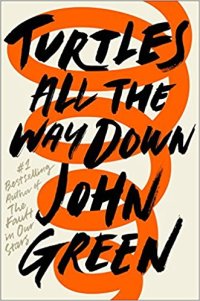
51YjlK890rL._SX329_BO1,204,203,200_Turtles All the Way Down by John Green

Based on the premise “NO, having a mental disorder does not make you better at solving crimes,” John Green’s latest novel is about a teenage girl with severe OCD and anxiety who finds herself trying to solve a missing person’s case.  It’s a really lovely and melancholy story about friendship, first love, and trying to figure out how to connect with other people despite feeling so different all the time.

23281856Garden of Lies by Amanda Quick

A friend mentioned that this book was about a brooding archeologist that reminded her of Toby Stephens, so naturally I read it the next day.  It is all that is silliest in an anachronistic historical romance mystery, but…it was about a brooding archeologist that reminded me of Toby Stephens, so I got what I wanted.

Learning the Enneagram RESOURCES

Books

Screen Shot 2017-10-17 at 10.09.39 AM

  • The Road Back to You by Ian Morgan Cron and Suzanne Stabile

    This book is a perfect primer for people new to the Enneagram.  It is simple, relatable, and the lists at the beginning of each chapter, “What It’s Like to be a Four,” go a long way toward helping you identify your type.

  • The Enneagram: A Christian Perspective by Richard Rohr

    A step up in complexity, Rohr’s book brought the Enneagram into cultural, and personal, awareness.  It includes the same sort of descriptions of each type, but with a bit more depth than The Road Back to You.

  • Mirror for the Soul: A Christian Guide to the Enneagram by Alice Fryling

    Once you’re sure of your type and asking, “Okay, now what?” this is the book for you.  Fryling’s focus is personal transformation and using the Enneagram to identify your God-given gifts, how your false self twists them, and how to reclaim your true self.  Really excellent.

  • The Complete Enneagram: 27 Paths to Greater Self-Knowledge by Beatrice Chestnut, PhD

    If you want the equivalent of an Enneagram textbook, Chestnut’s book is what you’re looking for.  Whereas other books devote sixteen pages to a type, this book offers forty-two.  It also delves into the three subtypes (self-preservation, social, and sexual) found in each type, which can help you narrow in even further on who you are.

Podcasts

Screen Shot 2017-10-17 at 10.11.52 AM

  • The Road Back to You by Ian Morgan Cron and Suzanne Stabile

    Much like their book by the same name, this podcast is an introduction to the Enneagram.  Each episode interviews someone famous-ish from the Christian world, highlighting their type and how it affects their life.  Quite good for hearing practical examples of what it looks like to be aware of your Enneagram type.

  • Typology by Ian Morgan Cron

    After their book was released, Cron continued similar work with his own podcast.  This one goes a bit deeper, though, offering a variety of interviews (so far there has been a panel of Nines and of Sixes) sharing personal experiences AND educational episodes by authors Richard Rohr and Beatrice Chestnut.


Are there other Enneagram resources that have helped you?
Comment and share them with us!

Jesus’s Death is Meaningless without a Resurrection

I think this will be one of those blog posts that is seemingly obvious and perhaps overly nit-picky, but I want to share a detail that deepened my theology anyway.

My favorite professor at DTS was adamant that Jesus’s death was meaningless without his resurrection.  This is not a new idea, since Paul says as much in 1 Corinthians 15:16-17:  “For if the dead are not raised, then Christ has not been raised either. And if Christ has not been raised, your faith is futile; you are still in your sins.”  So far, so obvious.  But ever since it was pointed out to me, I’ve noticed how often faith is shared that focuses entirely on Jesus’s death.  It’s present in the songs we sing (from hymns like “The Old Rugged Cross” to praise songs like “At the Cross”) where our joy and salvation is supposedly found at the foot of an execution instrument.  And it’s present in sermons and small group conversations where Jesus’s death is used as a shorthand to encompass his entire act of salvation.

Recently, a thought experiment dropped into my head.  Let’s say I am in a firing line about to be executed for my crimes.  A gun is pointed at me, and I’m crying and begging to be spared.  When the shot rings out, I am shocked to find that someone else has leapt in front of me to take the bullet in my place (in this scenario there is only one bullet in the whole world and therefore the punishment is over).  What is my honest reaction to this?  Yes, I would be momentarily grateful to still be alive.  But I would also feel grief that someone else took my place, rage at the incompetent executioner, and most importantly of all, GUILT.  I would forever feel guilty, knowing that my life had cost someone else theirs.

Now imagine that as soon as someone else takes the bullet for me and I fall over their body crying in shock and disbelief, they pop up, alive again.  “I’m alright,” they say.  “I took your punishment and an execution is recorded, but I’m alive again.”  What’s the prevailing emotion now?  JOY.  Now that gratitude goes on and on, and of course I’m going to want to follow that person around because of 1) their sacrifice and 2) their power.  But there’s no longer guilt, just joy.

I suppose that’s the subtle difference that makes how we speak of Jesus’s salvation so important.  When we disproportionately focus on Jesus’s death, we are emotionally cued to experience guilt.  But when his death is followed by resurrection, there is joy and freedom and grace.  It is very easy to start practicing this; just take an extra second to say “Jesus’s death and resurrection” every single time you talk about Jesus’s work of salvation.  It can drastically shape our view of God and our view of ourselves.  It did for me, anyway.

Transgenderism and Church Membership

On Sunday, my home church is voting to update its constitution, and if it is approved, I will no longer be a member of the church.

Here are the proposed changes to the section about gender and sexuality in full:

We believe that God wonderfully and immutably creates each person as male or female.  These two distinct, complimentary genders together reflect the image and nature of God.  Rejection of one’s biological sex is a rejection of the image of God within that person.

We believe that the term “marriage” has only one meaning and that is the uniting of one man and one woman in a single, exclusive union, as delineated in Scripture.  We believe that God intends sexual intimacy to occur only between a man and a woman who are married to each other.  We believe that God has commanded that no intimate sexual activity be engaged in outside of a marriage between a man and woman.  We believe that marriage ceremonies are Christian worship services that celebrate the covenant made between a man and a woman before God.

We believe that any form of sexual immorality, including but not limited to adultery, fornication, homosexual or bisexual conduct, bestiality, incest, pornography is sinful and offensive to God.

In order to preserve the function and integrity of [CHURCH NAME REDACTED] as the local Body of Christ, and to provide a biblical role model to the church as a whole and the community, it is imperative that all persons employed by the church in any capacity, those who serve the church as volunteers, and all members of the church should abide by and agree to these statements of belief and conduct themselves accordingly.

Although I have many grievances with these statements, some as foundational as my basic belief in the church as a place of radical grace, I will vote against it for two basic reasons:

  1. I do not believe transgender or transexual people to be a “rejection of the image of God within that person.”
  2. I am deeply worried against qualifications of church membership extending beyond some few core Christian doctrines.

Is Being Transgender a Sin?

I have expressed my opinion on homosexuality elsewhere, but I have not yet expressed my theology of transgenderism.  The thing is, while I can see where Christians read the Bible and can come away thinking it is a sin (though I believe the issue is not so straightforward, again, see my other post), I do not see similar evidence against transgenderism.

To “reject the image of God” within oneself implies that God made you correctly and you are trying to change it.  I’ve heard that said explicitly, that “God doesn’t make mistakes.”  Except…he does.  Or at least, to avoid a theological minefield, because we live in a fallen world, babies are born imperfectly.  Babies are born without brains!  And in less dramatic cases, babies are born with irregular heartbeats, with blood diseases and cleft palates.  In each case, Christians affirm the goodness of doctors who do their best to “correct” the problem the baby was born with.

Lest one argues for a differentiation between physical and sexual issues, we cannot forget our intersex brothers and sisters who are born with both male and female genitalia.  God allows babies to be born who are neither exclusively male or female, and unfortunately, they are largely ignored in theology.  Such is the case for my church’s constitution, which leaves no room for their existence.

All of this is to say, my theology easily allows for a baby who is born with a gender that does not match its sex.  In every other case of a “problem of birth,” our cultural and spiritual answer is to do what can be done to fix it.  I see no reason for us to deny this privilege to men and women who were born into bodies that did not belong to them.

(If I have misrepresented the experience of transgender men or women, I ask forgiveness!  If you have the emotional energy, please know I would love to hear from and learn from you.)

What Doctrines Determine Church Membership?

For that issue alone, I would vote against these changes to the constitution.  But according to these same changes, my disagreement means forfeiting my church membership.  After all, “all members of the church should abide by and agree to these statements of belief.”  I don’t agree, therefore I no longer qualify to be a member of this church.  And honestly, if membership is determined by lesser doctrinal issues such as these, I’m not sure I want to be a part of such a church.

In my mind, belonging to a church naturally necessitates believing in core Christian doctrines:  that God is the Triune Father, Son, and Holy Spirit, that God revealed himself most fully to us through the Bible, and that God offers us salvation from our sins through the life, death, and resurrection of Jesus.  In short, church membership should be extended to those who read the Nicene Creed and say, “Yes, that.”  We can, and should, have opinions about everything else.  But to make anything else into a matter of membership strikes me as excessively legalistic and exclusionary.  So for this, too, I will vote against these proposed changes.


I know that in many ways, my beliefs do not align with my Southern Baptist Church’s beliefs.  But I have found such beauty and encouragement in the fact that, although our opinions might differ about homosexuality or the role of women in the church, we can still meet together as sisters and brothers to worship the God we agree is more important.  It is incredibly sad to me that I will be denied membership of this church if these changes are passed.  But looking at the evangelical culture around me, I suppose I shouldn’t be surprised.

What I Read | SEPTEMBER 2017


Long Way Round by Ewan McGregor and Charley Boorman

and

Long Way Down by Ewan McGregor and Charley Boorman

I loved the documentaries by the same name, so it was fun to read about Ewan and Charley’s motorcycle travel adventures from their perspective.  Although it covers the same ground as the films, there were some fun extra scenes and interior thoughts.  These books only confirmed that 1) yes, I do love Ewan McGregor very, very much, and 2) it would be amazingly fun to travel across Asia or Africa with a best friend and film crew.

22934446

Not My Father’s Son by Alan Cumming

A memoir of a life so incredible (and sad) that it confirms the phrase “truth is stranger than fiction,” I loved this book despite being largely unfamiliar with Cumming’s work.  He’s a fantastic writer, and he tells an intentionally small story surrounding a month of his life in which massive family mysteries were brought to light.  A great read for fans of his or not, because you probably will be by the end.

SONY DSC

Don Quixote by Miguel de Cervantes

I really loved the beginning of Don Quixote with the descriptions of our protagonist going mad from reading too many books and inserting himself into a fantasy world of his own making.  It was uncomfortably delightful to read of the misadventures in which he makes things worse by trying to be chivalrous, and after 150 pages I was a bit tired.  Are all 1,000 pages more of the same, or does a plot develop?  Help me out and let me know if I’m missing out by stopping early.

34099546

Genuine Fraud by E. Lockhart

I devoured this book!  It is a story in reverse, starting with a girl hiding out in a Mexican resort, gradually taking steps back in time to reveal what she did to necessitate escaping from the law.  It is a really fun mystery (what did she do rather than who did it), and I just feel so blessed to be living in an age in which fictional teenage girls can be murderous psychopaths.

81ofDPF3rfL

Mrs. Fletcher by Tom Perrotta

This book is about a middle-aged woman exploring her sexuality, and I was super impressed by how…nice it is?  What I mean is, a bunch of people do a bunch of things, some questionable, some lovely, some awful, and these actions are always separated from the value of these characters.  Mrs. Fletcher might think or do things that make herself (and us) cringe, but we’re never meant to think that she’s a bad person because of them.  Lots of gender and sexuality stuff too!  This book was literally made for me.

download

They Both Die at the End by Adam Silvera

Despite a very direct title, reading this book is like watching Titanic thinking, “I hope they avoid the iceberg this time!”  Because they do die at the end.  And it sucks, because we’ve just spent a novel getting to know our two protagonists.  But the story is worth it, both because it’s an uplifting “if you knew this were your last day, how would that change the way you live your life?” query, and because it’s a cool sci-fi think piece on how society would change if people were notified of their death on their last day.  Not a fun book, but a very good one.

51g3PhJBgeL._SX323_BO1,204,203,200_

Love with a Chance of Drowning by Torre DeRoche

It’s another romance/travel memoir, though this very much leans into individual growth more than romantic love.  I wasn’t surprised to discover the pair split after this book, because I was honestly surprised they lasted throughout their two years sailing around the South Pacific.  Not that that’s a bad thing!  Torre and Ivan are a great example of why dating someone very different from you is a great way to push you beyond your comfort zone into new experiences…just don’t expect a happily-ever-after at the end of it.  Still, my main takeaway was:  I want to go sailing around the South Pacific, NOW.

51qiSnm2q1L._SX329_BO1,204,203,200_

I Hate Everyone But You by Gaby Dunn and Allison Raskin

Written incredibly well in only emails and texts, this is a book about two college freshmen staying friends despite a long distance separation, exploring their sexuality with varying levels of success, and figuring out what they want to do with their lives.  It’s surprisingly deep for also being very witty and compulsively readable.

The Young Pope is Both Sillier and Deeper Than You Heard

How did a television show that featured a pope dressing in medieval garb while “I’m Sexy and I Know It” played in the background end with me sobbing at the beauty and hope of it all? This series combined giddy camp (the fictional Pope Pius XIII infamously looses a kangaroo in the Vatican gardens and often tests his spiritual powers by commanding it to jump) with heartbreaking humanity (the selfsame pope struggles throughout the series with his pain at being abandoned and orphaned by his parents at age nine).  Perhaps most beautifully, The Young Pope insists that both the giddiness and the heartbreak are necessary to tell a story about humans and their relationship to God.

This is a show about hypocrisy without condemning that hypocrisy.  Our titular pope is a tyrant, determined to return the Catholic Church to an isolationist stronghold that needs no one while simultaneously desperate for the approval of his spiritual father and mother.  One of the arguably few “good” men in the show is a cardinal who participates in a graphic threesome (this is an HBO show), and the unarguably best “good” man is a self-confessed alcoholic homosexual.  On the other hand, our worst men are never allowed to be fully villainized.  The Secretary of State, though a political weasel, genuinely cares for the Church.  Even the most odious of characters, a cardinal accused of pedophilia, is humanized in a way that does not condone his sins but demands our compassion all the same.

A running theme in the show is the fear that the pope does not, in fact, believe in God.  This is a fear that he himself admits to, but it is not meant to lead to mockery or scorn.  Instead, it asks viewers to consider questions of doubt and faith, saints and sinners, and whether God smiles upon us at all.  Faith is messy, and that is something our pope learns when his commitment to law without mercy has devastating consequences.  It is only when he accepts the mystery of faith that he is able to let go of his past and find peace at long last.

The Young Pope is a beautifully evocative and highly stylized ten-episode series, full of symbolism that is equal parts cheesy and stunning.  The acting is incomparable, and the whole thing is a work of art, inspiring emotion long before thoughts can be ordered.  It is a show of contradictions, offering its audience a unique opportunity to step into the mystery of life, of doubt, of faith.

We Live in a Beautiful World

I have been watching this video several times a week for the last month.  It is a fanvid about Black Sails that presents many of the show’s most tragic scenes building in emotional intensity as a woman sings “we live in a beautiful world” louder and louder over the chaos.  I have a tendency to start accidentally crying while watching, and while I’m sure a huge amount of the emotional drive comes from being intimately acquainted with these characters, I’m sharing it here anyway.

It is the visual embodiment of my theology.

A couple years ago, I was quite obsessed with the theme of hope found in The Lord of the Rings (especially here and here), and in particular, this quote from The Two Towers:

Sam: It’s like in the great stories, Mr. Frodo, the ones that really mattered. Full of darkness and danger they were, and sometimes you didn’t want to know the end because how could the end be happy? How could the world go back to the way it was when so much bad had happened? But in the end it’s only a passing thing this shadow, even darkness must pass. A new day will come, and when the sun shines it’ll shine out the clearer. Those were the stories that stayed with you, that meant something even if you were too small to understand why. But I think Mr. Frodo, I do understand, I know now folk in those stories had lots of chances of turning back, only they didn’t. They kept going because they were holding on to something.

Frodo:  What are we holding onto, Sam?

Sam:  That there’s some good in the world, Mr. Frodo, and it’s worth fighting for.

This was particularly meaningful when I was emotionally preparing to move to Greece and to work in an anti-trafficking organization.  It was necessarily personal and a little self-centered.  I needed to find MY hope, the hope that would allow ME to choose the scary option and walk forward.

This video about Black Sails?  It’s broader.  I think it touches me so much right now because there isn’t a personal tragedy I’m working through – instead I am surrounded by other people’s tragedies.  Husbands dying, babies dying, hurricanes, white supremacists, mothers with post-partum depression, friends with undiagnosable illnesses, and enough people with anxiety and depression to remind me that for so many people, we live in a scary and overwhelming world.

And…we do.  We definitely do.  That’s why this video shows scenes of betrayal, heartbreak, violence, fear, and death.  But the thing that keeps me obsessed with this show, and with this video in particular, is that in the midst of this awfulness, there is an insistent theme that despite all this, “we live in a beautiful world.”

I think this is the most beautiful thing that Christianity offers.  Christianity says yes, this world is broken, and you are guaranteed to bleed when you brush against anyone or anything.  But Christianity says that inside that brokenness is beauty.  God created the world and it was good.  When it was broken it did not become evil, it just became a good thing broken.  And a thing that is broken can be fixed, which is exactly what God promises is happening and will someday happen in fullness.

So I cannot help but be overwhelmed by this video.  I cannot help but say, in hope, YES to the fact that we live in a beautiful world while watching destruction.  There is nothing that inspires me more than staring into something ugly and affirming the beauty that it was, is, and will become.  Christianity is a religion of paradoxes, and this is the one that touches me deepest.

The world is horrible, and we live in a beautiful world.

Where Is Your Heart? QUIZ

I was recently sent this prompt originated by A. W. Tozer that is meant to reveal what our heart invests in.  I’m a sucker for surveys and self-discovery, so here goes!

Rules for Self Discovery:

1. What you want most

I most want to live a stress-free life.  It’s exhausting to be anxious all the time.

2. What you think about most

Honestly, for the past month, Black Sails.  BECAUSE IT’S SO AWESOME.  But to break that down, that means I’ve been thinking about history and the potential for alternate histories, which makes me think of potential futures if only people are brave enough to unite with oppressed people groups and demand freedom for all.  I’ve also been thinking about queer relationships and what love really means, and how love can inspire people to the best and worst versions of themselves.

3. How you use your money

I save it!  If I’m going to spend money, it almost always goes toward travel.  I guess that means I value new experiences, broadening my outlook on life, and enjoying beauty.

4. What you do with your leisure time

I read and watch TV, because when I’m not living my life, I want to live as many other people’s lives as possible.

5. The company you enjoy

I enjoy people who are smart, thoughtful, and funny.  If we aren’t laughing while discussing all the ways we could change the world for the better, then what’s the point of hanging out (I’m being only mostly facetious)?

6. Who and what you admire

I admire talented people who use their skills to create beauty or unity or something unique.  I’m thinking Lin-Manuel Miranda level here.  But in my day-to-day life, I admire people who are creative and living life outside the norm as well as people whose perspective on life allows them to find joy in the little things.

7. What you laugh at

I laugh at snarky tweets, my cat running through his cat-tunnel, Try Guys videos, and…most things.  I like to laugh.

This exercise is meant to reveal the idols in your life, which is very uninteresting to me.  I used to think that when I loved something too much, I needed to get rid of it in order to prove (to God? to myself? to my church?) that I loved God most of all.  Now I think these things are gifts from God, and if anything, I should bring God into them and love them all the more.

Why Do So Many Enneagram Fours Want to Be Nines?

I still get comments on the blog post in which I discovered that I was not an Enneagram Nine, but a Four, and went through an emotional meltdown of sorts (I’ve since come to terms with being a Four, and now I love it…mostly).  There are apparently many people out there who misidentified themselves as Nines and were super disappointed when they found out they were, in fact, Fours.

It got me thinking: why do Fours want to be Nines so badly?  I can’t answer for everyone, but when I think about my upbringing, the answer seems pretty obvious for myself.

My family was very uncomfortable with emotions when I was a kid.  We were Polite Nice People who didn’t get angry or sad.  When a huge family tragedy/mystery happened my sophomore year of high school, we talked about it for the week in which it happened and then literally never again.  We avoid conversations in which disagreements might arise, and there is very much an unspoken attitude of wanting to maintain the status quo.

Added to this is the fact that my childhood was very much influenced by growing up going to a (white) Southern Baptist Church.  In my faith upbringing, there was a huge emphasis on a salvation that separated the sinful past (which implicitly included “bad” emotions like anger and depression) from the saved present.  There was an implicit, and often explicit, rule that being at church meant being happy.  But also not, like, too happy.  White Baptists don’t raise their hands while worshipping.  Everything in my childhood encouraged me to be even-handed and only mildly emotional.

It’s no real surprise, then, that I would learn to play the role of a Nine who is a peacemaker, who is detached from emotions, who sees all sides of a conflict and can navigate a resolution quickly.  More than learning to play the role, of course I would WANT to be a Nine, because that is the sort of personality that everyone I knew valued.

Not a FOUR, ugh.  It’s funny to think that I thought I was a Nine when looking back, everything I felt internally as a child was very Four.  I constantly felt like an outsider looking in, never special in friendships or achievements.  The things that did make me stand out (my passionate nerd interests) were things to be squashed into appropriate outlets if I wanted to avoid ridicule.  Ah, the number of hours I spent looking up Harry Potter fan theories or creating Lord of the Rings scrapbooks.  Alone.

On top of that, I was full of doubt and sadness.  I’ve talked many times before about the depression I went through in middle school and how I would pray that God would kill me.  It strikes me now that it needn’t have been so bad – the feelings I had weren’t all that strange.  If I’d had safe people who allowed me to be angry and irreverent, maybe I wouldn’t have turned those feelings inward as a toxic self-hatred.

But all the while, I had perfected the Peaceable Nine Mask.  I performed a Normal Happy Person very well, so well that eventually I believed that’s what I was.

I think for Fours, who are so often ruled by their emotions and can feel like we’re drowning in the worst ones, there’s something so appealing about being a Nine who seems to be above all of that chaos.  For those of us trained in the art of suppressing our emotions (I genuinely didn’t think I ever experienced anger until I went to counseling as a 23-year-old), it eventually seems possible to be our “Best Selves.”

What I love about the Enneagram is that it has taught me that my Best Self is not pretending to be a Nine.  It is leaning into my Fourness, admitting and celebrating the fact that I feel emotions far more deeply and quickly than many others.  My love is obsessive, my sadness is total, my anger is furious.  I’m still learning when it is appropriate to share those feelings and when to keep them inside.  But exploring the heights and depths and sidewaynesses of emotions has given me a level of self-awareness that many others don’t have.  And with that self-awareness, I’ve learned about showing grace to myself.  And when I learned to have grace for myself, it became so much more natural to give grace to others.  We’re all crazy beings with desires and fears that contradict, hinder, and inspire us, and I love being with people at their most confused.  My Fourness helps me appreciate people for the things they’re often ashamed of, and that is a gift I could never give if I continued to pretend I was Nine.